The Rescue Mission: How Devoted Fans Pulled Forgotten Jacks Back From the Edge of History
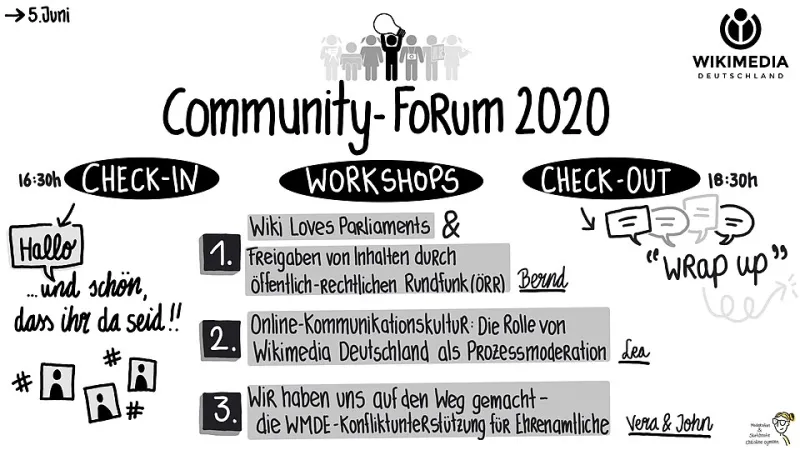
Photo: Christine Oymann für Wikimedia Deutschland e. V., CC BY-SA 4.0, via Wikimedia Commons
Forget the Jacks who never needed saving. The ones with the Wikipedia pages that run six scrolls long, the documentary deals, the anniversary editions. We're not here to talk about them.
This is about the other ones. The Jacks who came close — who had the moment, the work, the cultural footprint — and then got swallowed by time, shifting tastes, or just plain bad luck. And it's about the people who refused to let that be the end of the story.
Because over the last two decades, something genuinely remarkable has happened in fan culture. The internet didn't just give people a place to talk about their favorites. It gave them the infrastructure to become unofficial archivists, oral historians, and cultural advocates. And nowhere has that been more visible than in the communities that have formed around overlooked Jacks.
When the Algorithm Forgets You
Let's start with the structural problem, because it shapes everything that follows. Streaming platforms and social algorithms are ruthlessly present-tense. They surface what's getting engagement right now, which means that artists, actors, and cultural figures who did their most significant work before the digital era face a kind of double erasure: they're not in the conversation because they're not in the algorithm, and they're not in the algorithm because they're not in the conversation.
For a figure like Jack Nitzsche — the arranger, composer, and producer whose fingerprints are on some of the most important American recordings of the 1960s and '70s — the challenge isn't that people actively dislike his work. It's that most people under 40 have never encountered his name at all. His contributions to albums that shaped entire genres have been absorbed into the legacies of more famous collaborators, and the man himself has become a footnote in stories that should probably credit him as a co-author.
That's the kind of erasure fan communities are fighting against. And they're winning more often than you might think.
The Moderators Who Became Historians
We reached out to several community moderators running dedicated spaces for lesser-known Jacks — on Reddit, Discord, and a handful of old-school forum platforms that have somehow survived the social media consolidation. What they described wasn't just fan enthusiasm. It was something closer to preservation work.
"I started the subreddit because I couldn't find anywhere online that was actually comprehensive about his early career," said one moderator who runs a community dedicated to a character actor named Jack whose work in 1970s television has been almost entirely absent from streaming platforms. "It was just scattered mentions in other places. So I figured if I wanted it to exist, I had to build it myself."
That DIY impulse is everywhere in these communities. Members scan and upload old magazine interviews. They track down out-of-print VHS recordings and find ways to make them accessible. They compile filmographies that are more accurate than anything on the major databases, because they've done primary source research that no professional outlet has bothered to replicate.
One Discord server dedicated to a Jack who had a brief but genuinely influential run in early '90s indie film has a dedicated channel just for sourcing physical media — members coordinate to find and digitize rare prints before they degrade further. "The studios aren't going to do it," the server's founder told us. "They don't see the commercial case. So it falls to us or it doesn't happen."
The Oral History Problem
Archive work is one thing. But some of what these communities are preserving can't be found on any tape or in any library. It lives in the memories of people who were actually there — collaborators, crew members, contemporaries who worked alongside forgotten Jacks at the height of their careers.
Several fan communities have organized formal oral history projects, using video interviews and written testimonials to capture firsthand accounts before that generation of witnesses is gone. One community dedicated to a Jack who worked as a session musician through the late '60s and '70s has compiled over forty hours of recorded interviews with people who played alongside him, recorded with him, or caught his live performances during his brief touring years.
"He never gave interviews himself. He was private like that," one of the project's organizers explained. "So everything we know about what he was actually like in a room, how he worked, what he cared about — that only exists in other people's memories. We're racing the clock."
The urgency in that framing is real. Fan communities have increasingly recognized that their work isn't just about appreciation. It's about documentation, and documentation has a deadline.
When the Rescue Actually Works
Sometimes the effort breaks through into the mainstream in ways that feel genuinely surprising. A Reddit thread goes viral. A journalist stumbles across a community's compiled research and writes a piece that reaches a new audience. A filmmaker discovers the archival work and decides to build a documentary around it.
These moments matter not just for the specific Jack being resurected, but for the communities themselves. They validate the years of quiet work and attract new members who bring fresh energy and new sources. The cycle accelerates.
One of the cleaner examples of this in recent memory involved a Jack whose work as a character actor in 1980s genre films had been almost entirely forgotten — until a fan community's meticulous documentation caught the attention of a popular film podcast. The episode they produced reached an audience of several hundred thousand, and within weeks, the community had tripled in size and one of the actor's films had been licensed for streaming for the first time.
"That was the moment it felt real," the community's lead moderator said. "Like the work actually mattered outside our little corner of the internet."
What This Means for the Bigger Picture
There's something worth sitting with here, beyond the specific stories. What fan communities are doing for forgotten Jacks is essentially what universities and cultural institutions do for figures deemed worthy of academic preservation — except they're doing it without funding, without institutional support, and purely out of love for the work.
That's not a small thing. It's a genuinely new model for how culture gets preserved, and it's being built by people who just couldn't stand the idea of something they loved disappearing without a fight.
The mainstream will always have its favorites. The algorithm will always push what's already popular. But in the margins, in the Discord servers and subreddits and meticulously maintained fan sites, there are people making sure the full story gets told.
And for more than a few forgotten Jacks, that's made all the difference.