What's in a Name? Why Thousands of American Parents Are Choosing 'Jack' — and What It Means for the Kids Who Carry It
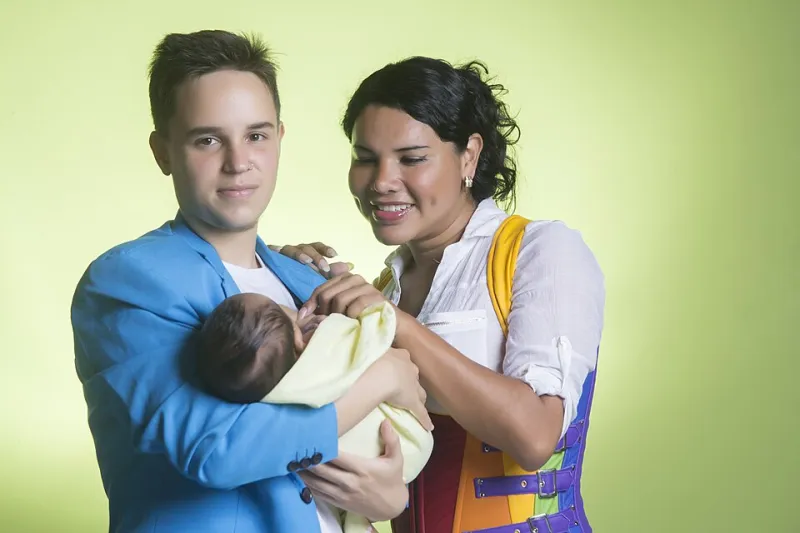
Photo: Ceoti, CC BY-SA 4.0, via Wikimedia Commons
Every year, somewhere in a delivery room in Ohio or a birthing center in Oregon or a hospital in suburban Atlanta, a couple looks at their newborn son and says it out loud for the first time: Jack. Sometimes it's a family name. Sometimes it's a gut feeling. And sometimes — more often than you might expect — it's because of a president, a rock star, a movie character, or a legend that left a permanent mark on someone's life.
The name Jack has sat comfortably in the top 50 baby names in the United States for most of the last two decades, according to Social Security Administration data. It peaked at No. 26 in 2021 and has barely budged since. But the raw numbers only tell part of the story. What's more interesting is why parents keep choosing it — and what they're quietly hoping it will do for the little person wearing it.
The Fan Factor: When a Name Becomes a Tribute
Naming a child after a cultural icon isn't new. Parents have been honoring their heroes through baby names for as long as heroes have existed. But something has shifted in recent years. Fandom itself has gotten more intense, more personal, and more identity-defining. When someone grows up watching a certain film or listening to a certain artist on repeat, that connection doesn't just fade when they become adults and start families. It deepens.
Take families like the Harmons of Nashville, Tennessee. When their son was born in 2019, they named him Jack — partly after Jack White, the guitarist who soundtracked their entire college relationship. "It wasn't like we sat down and made a formal decision," says his mother, Renee. "It just felt right. Jack White was always part of our story, and now Jack is part of our story too."
That kind of sentiment is surprisingly common. Naming expert and author Laura Wattenberg, who runs the popular site Baby Name Wizard, has tracked what she calls the "celebrity echo" effect — the lag between a famous person's peak cultural moment and the surge in parents naming their kids after them. "With a name like Jack, the echo never fully fades," she notes. "It gets reinforced by each new generation of icons who carry the name."
What Child Psychologists Actually Think About This
Here's where it gets more complicated. Giving a child a name loaded with cultural expectation sounds romantic from the outside, but does it actually affect how a kid develops? The research is genuinely mixed.
Dr. Alicia Monroe, a developmental psychologist based in Chicago, has spent years studying how names influence self-perception in children and adolescents. Her findings are nuanced. "A name with strong cultural associations can work as a kind of social shorthand," she explains. "Kids named Jack often get described by teachers and peers as confident, reliable, no-nonsense. Whether or not that's accurate, it shapes how others treat them — and eventually, how they see themselves."
That feedback loop, she argues, is real but not deterministic. "The name creates an ambient expectation. It doesn't write the script, but it does set a kind of stage."
Not everyone is as measured about it. Some researchers push back on what they call the "nominative determinism" fantasy — the idea that a powerful name produces a powerful person. "Parents want to believe the name carries magic," says Dr. James Elford, a clinical psychologist at the University of Michigan. "Sometimes it does. More often, it's just a name, and the kid figures out who they are on their own terms."
The Legend Ladder: Which Jacks Are Parents Actually Thinking About?
When parents say they named their son Jack after a legend, which legend are they actually picturing? The answer, it turns out, varies wildly by generation and by region.
For parents in their 40s and 50s, Jack Kennedy still looms large — the mythology of Camelot, the image of a young, charismatic leader cut down too soon. For parents in their 30s, it's more likely Jack Nicholson's cool unpredictability, or Captain Jack Sparrow's swaggering charm, or Jack Dawson's romantic self-sacrifice in Titanic. Younger millennial parents often cite Jack White or Jack Johnson. And increasingly, there's a cohort of parents who can't point to a single Jack but feel like the name itself is the legend — a composite of everything the name has come to represent.
"Jack is one of those rare names that has accumulated cultural capital across multiple eras without ever feeling dated," Wattenberg says. "It's not nostalgic. It's just... solid."
Passing Down More Than a Name
For many families, the act of naming a child Jack is less about the specific celebrity and more about what that celebrity represented in their own life story. It's a form of legacy transfer — an attempt to pass down not just DNA, but values, tastes, and a sense of what it means to move through the world with a certain kind of presence.
Renee Harmon puts it simply: "I want my Jack to grow up knowing that names mean something. That the things you love are worth honoring."
There's something genuinely moving about that impulse, even if the psychology is complicated. Fandom, at its best, is about connection — to art, to history, to other people who feel the same way you do. When a fan names their child after the thing they love most, they're extending that connection forward in time. They're saying: this mattered enough to carry.
The Community Angle: Names as Belonging
At The Jack Online, we talk a lot about what it means to be part of a community built around a name. And there's something worth sitting with here: the parents choosing Jack aren't just making a personal statement. They're — knowingly or not — plugging their kid into a vast, loosely connected cultural network. Every Jack Nicholson movie marathon, every Jack Kennedy documentary, every tribute post on a fan forum, is part of the same ecosystem their son now inhabits.
Whether that's a gift or a burden probably depends on the kid.
But here's what seems clear: in a culture that increasingly values authenticity and intentionality, the choice to name a child after a legend isn't random. It's a declaration. It says something about who the parents are, what they believe in, and what kind of story they hope their child will eventually tell.
And if history is any guide, the Jacks of the next generation will figure out exactly how to make that name their own — just like every Jack before them did.
Have a Jack in your family with a story behind the name? Drop it in the community forum. We'd love to hear it.