Same Name, Different Game: How 'Jack' Became Hollywood's Most Shapeshifting Archetype
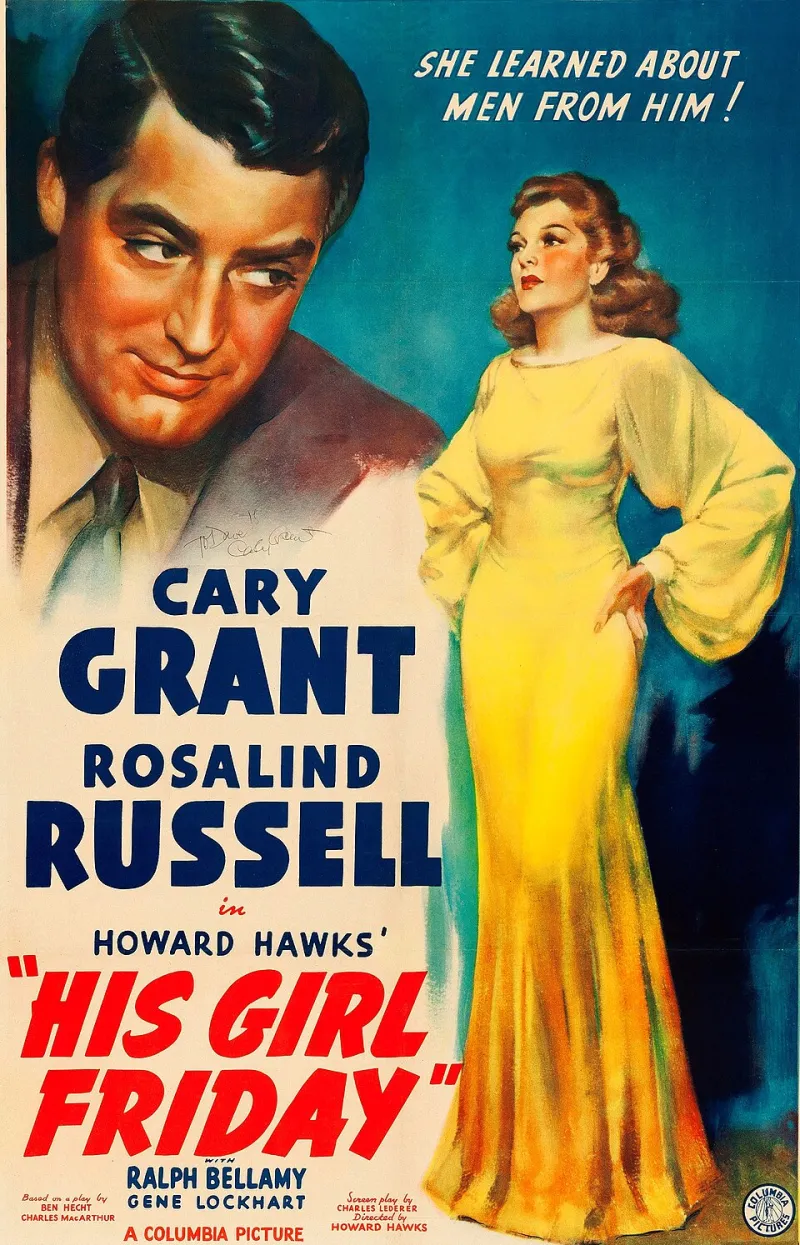
Photo: "Copyrighted by Columbia Pictures Corp, New York, N. Y. 1939", Public domain, via Wikimedia Commons
There's something almost eerie about how often the name 'Jack' shows up at the center of American cinema's most defining moments. It's not a coincidence, and it's not lazy screenwriting. The 'Jack' archetype — that particular cocktail of charm, unpredictability, and barely contained chaos — has proven to be one of the most durable character molds Hollywood ever stumbled into. And the mold keeps getting remade.
Here at The Jack Online, we think about this stuff a lot. So we went digging.
The Noir Era: Jack as the Dangerous Unknown
Let's start at the beginning — or at least, the cinematic beginning that most people recognize. Classic Hollywood noir gave American audiences a very specific kind of protagonist: a man on the edge, operating in moral gray zones, usually with a cigarette and a secret. The name 'Jack' fit this character like a trench coat.
Think about the energy those films were channeling. Post-war America was anxious, disoriented, and hungry for stories about men who could navigate a broken world on their own terms. 'Jack' sounded tough without being cartoonish. It was blue-collar but versatile — a name that could belong to a private eye, a drifter, or a two-bit con man who somehow always ended up being the most interesting person in the room.
The archetype wasn't just about toughness, though. It carried an undertone of instability. A Jack character in the noir tradition was someone you rooted for even when you weren't entirely sure you should. That moral ambiguity? That's load-bearing. It's what kept audiences leaning forward.
Nicholson and the Explosion of Unpredictability
If there's one real-world figure who crystallized the modern 'Jack' archetype on screen, it's Jack Nicholson — and it almost feels too obvious to say it. But the reason his name keeps coming up in these conversations is that he didn't just play one kind of character. He stretched the archetype until it nearly broke.
From his early counterculture work in films like Easy Rider through his Oscar-winning turns in One Flew Over the Cuckoo's Nest and As Good as It Gets, Nicholson demonstrated that a 'Jack' character could be genuinely dangerous and deeply funny in the same breath. He made volatility look like a personality trait rather than a flaw. That's a very specific kind of magic, and it left a long shadow over how American filmmakers thought about naming and casting their complicated male leads.
The Nicholson era essentially gave Hollywood permission to make 'Jack' synonymous with brilliant instability. Every director who came after him — consciously or not — was working with that association baked into the culture.
The Comedy Pivot: Jack Black and the Reinvention
Here's where it gets interesting. By the early 2000s, the archetype needed air. The brooding, volatile Jack had been done — thoroughly, brilliantly, exhaustively done. Enter Jack Black, who didn't so much reject the template as flip it inside out.
Black's screen persona kept the unpredictability and the barely-contained energy, but redirected it toward something warmer and more self-aware. His characters in films like School of Rock and High Fidelity were still chaotic, still operating on their own frequency — but the chaos was now something you could laugh with rather than flinch at. He democratized the archetype. Suddenly, a 'Jack' didn't need to be menacing to be magnetic.
This shift reflected something real happening in American culture. The early 2000s were a moment when irony and sincerity were constantly negotiating with each other, and Jack Black lived right in that tension. His version of the archetype said: you can be a mess and still be the hero. That resonated.
Indie Cinema and the Fragmented Jack
As Hollywood's grip on the cultural conversation loosened through the 2010s — thanks to the indie boom, the streaming explosion, and the rise of prestige TV — the 'Jack' archetype fragmented in fascinating ways. Directors working outside the studio system started using it less as a character type and more as a kind of shorthand for a specific kind of American male anxiety.
Indie films began populating their casts with Jacks who were self-aware about their own dysfunction. These weren't larger-than-life figures. They were guys who knew they were in over their heads and kept swimming anyway. The archetype shrank to human scale, and somehow became more relatable for it.
Streaming platforms accelerated this. With longer story arcs available and audiences willing to sit with morally complicated characters across multiple seasons, the 'Jack' figure could be developed with a nuance that a two-hour film rarely allows. The unpredictability that once defined the archetype became, in the streaming era, a slow reveal — something you discovered episode by episode.
TikTok and the Micro-Jack
Okay, so where does TikTok fit into all of this? Hear us out.
The short-form video ecosystem has created its own version of the 'Jack' archetype — compressed, immediate, and optimized for virality. The creators who blow up on TikTok by leaning into this energy aren't making noir films, obviously. But the character they're performing — charming, slightly unpredictable, operating by their own rules, impossible to look away from — is recognizably descended from the same cultural DNA.
What's wild is how self-conscious this generation is about the archetype. They know the references. They're sampling from the same cultural library that gave us Nicholson's grin and Black's manic energy, and they're remixing it in 60-second increments. The 'Jack' archetype didn't get left behind by new media. It adapted, like it always has.
Why It Keeps Working
So what's the actual secret? Why does this particular character configuration — charming, volatile, morally flexible, impossible to pin down — keep finding new audiences across completely different eras and formats?
Part of the answer is that it reflects something Americans genuinely value, even if they'd describe it differently depending on the decade. Independence. The refusal to be fully domesticated. The sense that a person contains more than the roles society assigns them.
But there's also something about the name itself. 'Jack' is short, punchy, and carries almost no class baggage — it can belong to anyone. That universality is a feature, not an accident. When filmmakers name a character Jack, they're reaching for something that feels both specific and wide open.
At The Jack Online, that's exactly the energy we're here for. The name is a door, not a wall. And every generation finds a new room on the other side.