Waiting on the Movie That Never Comes: The Legendary Jacks Hollywood Keeps Ignoring
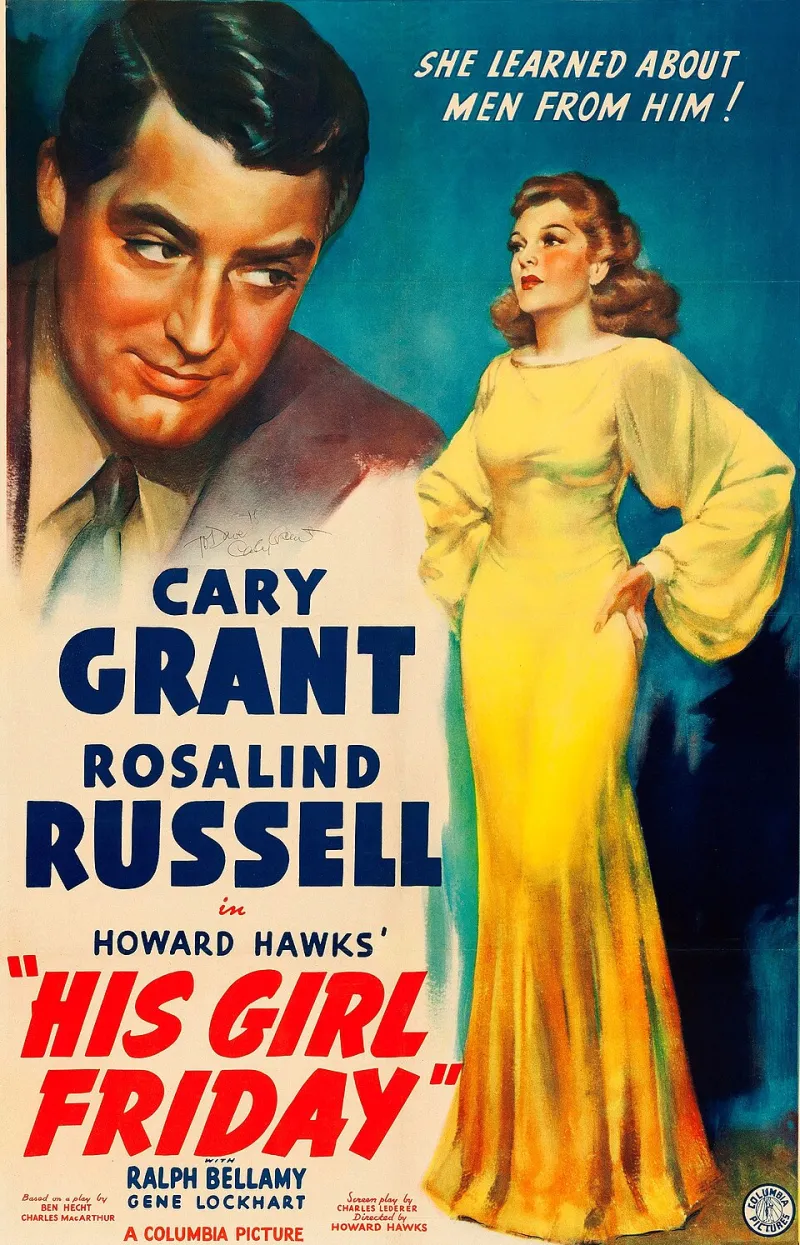
Photo: "Copyrighted by Columbia Pictures Corp, New York, N. Y. 1939", Public domain, via Wikimedia Commons
There's a particular kind of frustration that fans know all too well. It's the slow burn of watching Hollywood churn out biopics about figures you've barely heard of — complete with awards campaigns, prestige directors, and A-list casts — while the legends you've spent years celebrating get nothing. Not even a limited series. Not even a documentary on a mid-tier streaming platform. Just silence.
For a community built around the cultural weight of a single name, that silence hits differently. Some of the most transformative, boundary-pushing, genuinely world-altering figures to ever carry the name Jack have been waiting decades for their definitive onscreen portrait. And somehow, it still hasn't arrived.
So what's actually going on?
The Biopic Boom That Left Certain Legends Behind
The last fifteen years have been genuinely great for the biographical film. From Bohemian Rhapsody to Elvis to I, Tonya to Judy, Hollywood rediscovered that audiences will show up in massive numbers for a well-made story about a real person they already love. Studios leaned in hard. Streamers followed. Awards bodies practically carved out a dedicated lane for the genre.
And yet, for all that activity, certain figures — particularly some of the most culturally significant Jacks in American entertainment history — never made it through development. Projects were announced, whispered about, occasionally even cast, and then quietly disappeared from the conversation. No explanation. No official cancellation. Just gone.
That pattern isn't accidental. It reflects something real about how Hollywood evaluates which stories are worth telling — and which ones are considered too complicated, too expensive, or too legally fraught to bother with.
Rights, Estates, and the Wall Nobody Talks About
Here's the part that rarely makes it into entertainment journalism: the single biggest obstacle to a great biopic isn't finding the right director or landing the perfect lead actor. It's the rights conversation. Specifically, it's getting the cooperation — or at minimum the non-opposition — of the estate, family members, or rights holders connected to the subject.
For legendary figures who left behind complicated legacies, enormous catalogs, or fractured family situations, that negotiation can become a years-long standoff. Studios don't love uncertainty. They especially don't love the prospect of making a $100 million film and then getting hit with legal challenges before it even hits theaters.
Some of the most iconic Jacks in entertainment history fall squarely into this category. Their stories are rich, dramatic, and deeply cinematic. But the rights landscape surrounding their work, their image, and their personal narratives is genuinely tangled in ways that make even enthusiastic producers hesitate. The result is a kind of creative paralysis — everyone agrees the story deserves to be told, and nobody can figure out how to actually tell it.
The "Too Big" Problem
There's another dynamic at play that doesn't get discussed enough, and it's almost the opposite of the rights issue. Some Jacks are considered too legendary for a conventional biopic treatment. Their lives are so sprawling, their influence so vast, their cultural footprint so enormous that any attempt to compress the story into two hours feels inherently reductive.
This is a real creative challenge. The best biopics tend to work by focusing tightly — a specific period, a defining relationship, a single transformative year. That focused approach works beautifully for figures whose legacies have a clear arc or a natural dramatic centerpiece. But for someone whose career spanned multiple decades, multiple art forms, and multiple cultural eras, the question of where to start becomes genuinely paralyzing.
Pitching a biopic about a legend of that scale means making an argument for why this chapter of the story is the right one to tell. And when the entire life is extraordinary, that argument gets harder to make convincingly in a pitch room.
Studio Politics and the Prestige Calculus
Let's also be honest about something: studio politics matter enormously in this equation. Biopics don't get made purely because the subject deserves one. They get made because someone powerful inside a studio or production company is personally invested in seeing them happen. A champion. An advocate. Someone willing to push the project through the inevitable rounds of development hell.
For certain legendary Jacks, that internal champion has never materialized in a meaningful way. The projects have existed as ideas, as treatments, occasionally as full scripts that circulated quietly through Hollywood without ever finding the right combination of executive enthusiasm and studio timing. Sometimes it's a matter of who controls which lot. Sometimes it's about which director has the heat at any given moment. Sometimes it's genuinely just bad luck — the right project at the wrong moment.
What's maddening is that the audience is clearly there. Fan communities have been vocal for years about wanting these stories told properly. The demand isn't speculative. It's documented, measurable, and loud.
What Gets Lost When the Story Goes Untold
This isn't just a matter of fan frustration, as real as that frustration is. There's something genuinely at stake culturally when transformative figures don't receive serious biographical treatment.
Biopics do something that fan sites, documentaries, and even great journalism can't fully replicate: they introduce a legend to an audience that didn't grow up with them. A well-made biographical film has the power to make someone's story feel immediate and urgent to a twenty-year-old who wasn't alive when the subject was at their peak. That kind of intergenerational transmission matters. It's how legacies survive.
When that film never gets made, the story stays confined to the people who already know it. The legend doesn't shrink overnight — but over time, without that kind of cultural reinforcement, the edges start to blur. Younger audiences encounter the name without the full context. The depth of the impact gets harder to convey.
For a community dedicated to keeping these legacies alive and meaningful, that slow erosion is the real concern. Not just the absence of a movie, but what that absence signals about whose stories get preserved and amplified — and whose get quietly left behind.
The Case for Optimism (Barely)
Here's the thing, though. The landscape is genuinely shifting. The success of unconventional biographical projects — the ones that took creative risks with structure, tone, and perspective — has opened up space for stories that might have seemed too complicated or too legally messy just a decade ago. Streaming has expanded what's possible. A limited series can do what a two-hour film can't. Documentary formats have gotten more sophisticated and more willing to engage with contested, complex legacies.
The window for getting these stories told properly hasn't closed. But it's not unlimited, either. The people who knew these legends personally, who worked alongside them and carry firsthand knowledge of what made them extraordinary, aren't going to be around forever.
Somewhere in Hollywood right now, there are probably scripts sitting in development limbo, waiting for the right combination of circumstances to finally move forward. We're choosing to believe that. We kind of have to.
Because the alternative — accepting that some of the most extraordinary figures to ever carry this name just won't get their moment on the big screen — is not something this community is ready to sit with.