From Noir to Now: How 'Jack' Became the Name America Keeps Reaching For
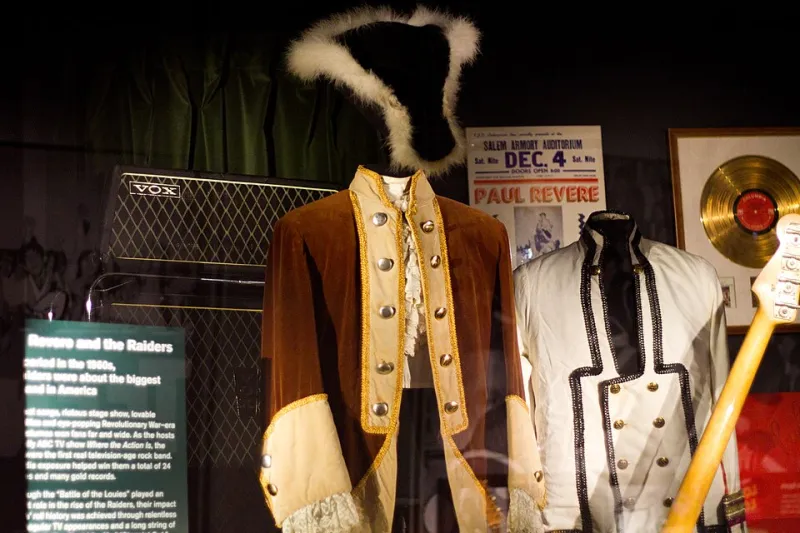
Photo: Razvan Orendovici from United States, CC BY 2.0, via Wikimedia Commons
There's a moment in almost every major chapter of American pop culture where you stop and notice it: the name Jack is right there in the middle of everything. Not hovering at the edges, not playing a supporting role — right in the thick of it, shaping what people talked about, argued over, and obsessed on. That's not an accident. That's a pattern, and it's one worth pulling apart.
Here at The Jack Online, we spend a lot of time thinking about what makes a name carry weight. But this particular question — why Jack, and why across so many different eras? — goes deeper than fandom. It touches something real about how American culture works, who it elevates, and what it's looking for at any given moment.
The Noir Era: Jack as the Flawed Everyman
Start in the 1940s, and you're immediately in shadowy territory. Film noir was doing something genuinely new for American audiences — it was putting morally ambiguous, emotionally complicated men at the center of stories that didn't offer clean resolutions. And those men needed names that felt grounded. Not aristocratic. Not foreign. Familiar.
Jack fit perfectly. It was the name of your neighbor, your coworker, the guy at the end of the bar who might be trustworthy or might not. Cultural historians who study the period point to how Hollywood casting and scriptwriting in the noir era leaned heavily on working-class American names to signal a particular kind of authenticity. Jack, alongside a handful of others, became shorthand for a man shaped by circumstances he didn't fully control — someone the audience could root for even when they probably shouldn't.
This wasn't coincidental. Post-WWII America was processing a lot: returning veterans, economic anxiety, a society that had been promised clarity and was getting complexity instead. The Jacks on screen reflected that tension back at audiences in a way that felt honest.
Rock and Roll's Rebellious Jack
Jump forward to the 1950s and early 60s, and the name migrates into a completely different cultural arena — but carries the same essential energy. Rock and roll was exploding, and with it came a new archetype: the rebel who wasn't quite sure what he was rebelling against, only that the rebellion felt necessary.
Jack Kennedy's presidency — whatever your politics — became culturally inseparable from this moment. The name was suddenly associated with youth, with forward momentum, with the idea that America could reinvent itself. That association bled into music, into fashion, into the way young people talked about the future. When you named a character Jack in a song or a story during this period, you were invoking something specific: potential, restlessness, a refusal to settle.
The rock artists who thrived in this era understood instinctively that names carry frequencies. Jack was the frequency of someone who hadn't peaked yet — someone still in motion.
The 70s and 80s: Jack Gets Complicated
By the time the 1970s rolled around, the cultural optimism had curdled a bit. Watergate, Vietnam, the oil crisis — America was in a more cynical mood, and its pop culture reflected that. This is where Jack starts appearing in darker, more psychologically layered contexts.
Think about the iconic screen presences of that era, the actors who defined what it meant to be compelling and dangerous on film. The name Jack was attached to figures who embodied a very specific American contradiction: charismatic but volatile, brilliant but self-destructive. The cultural analysis here is almost too neat — Jack became the name you gave a character when you wanted the audience to be simultaneously drawn in and warned off.
Into the 80s, this complexity deepened. Pop culture was splintering into subcultures, and Jack appeared across all of them — in hair metal, in action films, in the early stirrings of hip-hop culture where the name carried street-level credibility. Each subculture was essentially borrowing the name's existing freight and redirecting it.
Hip-Hop's Reinterpretation
Hip-hop's relationship with the name Jack is particularly interesting because it's one of the few cases where a cultural movement took a name and deliberately recontextualized it. In early hip-hop slang, to "jack" something meant to take it, to claim it — an act of cultural appropriation in the most literal sense. The name stopped being purely personal and became a verb, an action, a statement of intent.
This linguistic evolution matters. It tells you that by the late 80s and into the 90s, Jack had accumulated enough cultural meaning that it could be repurposed, twisted, built upon. You can't do that with a name that hasn't earned weight. Hip-hop artists and their communities were, consciously or not, acknowledging the name's history while simultaneously rewriting it for a new generation.
The Jacks who emerged from this era — in music, in film, in the early days of what we'd now call celebrity culture — carried that duality. They were legacies and originals at the same time.
The Streaming Age: Jack Finds a New Home
Fast forward to now, and something interesting is happening. In an era of algorithmic recommendation and fragmented attention, the name Jack is experiencing a kind of renaissance. Streaming platforms have made it easier than ever to discover older cultural figures, to fall into rabbit holes of archival footage and forgotten interviews. Fan communities — including communities like this one — have become the connective tissue between generations of Jacks.
What's striking is that younger audiences aren't just passively consuming this history. They're actively curating it, arguing about it, creating new content around it. The Jacks of previous eras are being reinterpreted through contemporary lenses — their complexity appreciated in new ways, their contradictions examined with more nuance than they might have received in their own time.
This is, honestly, one of the things that makes running a site like The Jack Online feel genuinely meaningful. The cultural analysis isn't happening in university classrooms or in the pages of academic journals (though it's happening there too). It's happening in comment sections, in Discord servers, in fan-made video essays that rack up millions of views.
Why This Name, Why America
So what's the actual answer? Why Jack, across all of these decades and all of these wildly different cultural contexts?
The most honest answer is that Jack is a name that American culture has consistently chosen to load with meaning — and then kept choosing, over and over, because the meaning kept paying off. It's short enough to feel immediate, common enough to feel accessible, and somehow flexible enough to absorb whatever a given era needed to project onto it.
Every generation finds its own Jack. And every Jack, in some way, ends up telling us something true about the moment that produced them.
That's the real Jack effect. Not just a name that keeps showing up — but a name that keeps meaning something every single time it does.